

BackRestore Claims Evaluated: Medical-Grade Spinal Decompression Relief to Restore Back Health & Sciatica Pain Support Without Surgery
A 2026 informational overview of BackRestore's Regenesis Tri-Therapy System for chronic lower back pain, herniated disc support, and pinched nerve relief — how the company describes its home spinal decompression device, pricing, 90-day guarantee, and what to know before purchasing
Fountain Valley, CA, March 31, 2026 (GLOBE NEWSWIRE) -- This informational overview contains affiliate links. If a purchase is made through these links, a commission may be earned at no additional cost. This content does not constitute medical, health, or therapeutic advice. All product details described below reflect how the company presents its product and should be verified directly on the official website before any purchasing decision.
The term "claims evaluated" within this overview refers to how BackRestore presents and explains its own product positioning, including the mechanisms and intended use cases described on its official website. This overview does not function as a third-party product review or independent clinical assessment. The phrase "medical-grade" reflects how BackRestore describes its decompression approach and does not indicate that the device has been cleared, approved, or registered by the FDA as a medical device.
BackRestore has made available a 2026 informational overview designed to clarify how its Regenesis Tri-Therapy System is positioned in relation to spinal decompression concepts and sciatica-related discomfort. The overview outlines how the company describes its approach, the mechanisms it references, and key considerations for individuals exploring non-surgical back support options.
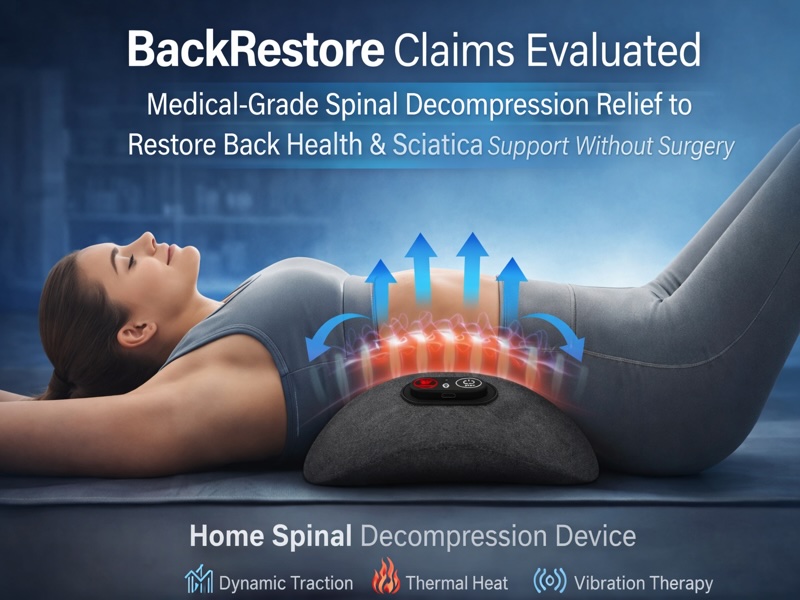
BackRestore, distributed by Core Renew out of Fountain Valley, California, is a home-use spinal decompression device that combines three therapy modes — mechanical traction, thermal heat, and neuromuscular vibration — into what the company calls the Regenesis Tri-Therapy System. BackRestore describes its approach as delivering spinal decompression support in a 15-minute daily session, targeting adults who want a non-surgical, drug-free option they can use at home.
The overview outlines how BackRestore describes its approach, the spinal decompression concepts it references, and practical considerations such as pricing, guarantee terms, and product details. Current product details and pricing are available by viewing the current BackRestore offer (official BackRestore page).
This overview is presented in association with BackRestore and reflects how the company communicates its product positioning. It is not a clinical evaluation, medical advice, or third-party product review.
Individual results vary. Home therapy devices are not substitutes for professional medical evaluation, diagnosis, or treatment. Consult a qualified healthcare provider before starting any new spinal therapy, particularly if you have a diagnosed spinal condition or have undergone back surgery.
How BackRestore Describes Its Approach
BackRestore positions its system around a straightforward idea: that many forms of chronic lower back pain and sciatica-related discomfort are driven by spinal compression. Throughout the day — sitting, standing, lifting, carrying — gravity and repetitive loading push the vertebrae closer together. Over time, especially after age 30, the discs between those vertebrae can lose fluid, shrink, and become less effective as cushions. When that happens, nerves can become compressed or irritated, and that compression is where the pain originates.
BackRestore describes its Regenesis Tri-Therapy System as addressing this through three simultaneous mechanisms:
Dynamic Traction — The device uses a curved arch to gently stretch the spine while the user lies on it. BackRestore describes this as creating space between vertebrae to reduce intervertebral pressure, which the company states may help relieve compression on spinal nerves.
Thermal Hydro-Therapy — The device delivers heat to the lower back area. BackRestore describes this as helping to promote circulation and support the flow of nutrients and oxygen to spinal discs that may be fluid-depleted from daily compression.
Neuromuscular Vibration — High-frequency vibration stimulates the muscles surrounding the spine. BackRestore describes this as helping to relax tight paraspinal muscles and support the decompression effect by reducing the muscular tension that can pull the spine back into a compressed state after a session.
The company positions this combination as the reason the device may provide more sustained comfort compared to approaches that address only one aspect of back pain — such as heat alone or stretching alone — because it targets compression, circulation, and muscular tension in the same session.
Spinal Decompression Concepts Explained
To understand what BackRestore is describing, it helps to understand what spinal decompression actually means in the broader context of back pain management. The concept itself is well established in rehabilitation medicine, even though specific devices vary widely in how they deliver it.
Spinal decompression, at its core, is about reducing pressure within the intervertebral discs. Spinal discs act as shock absorbers between vertebrae. When a person is upright, gravity compresses them. When that compression becomes chronic, discs can lose hydration, bulge, or herniate — pushing against nearby nerve roots. That nerve irritation is what produces the radiating leg pain associated with sciatica.
Published research supports the connection between disc compression and sciatica. A 2007 review published in BMJ by researchers at Erasmus University Medical Center Rotterdam noted that in approximately 90% of sciatica cases, the underlying cause is a herniated disc compressing a nerve root. That statistic is widely cited across spinal research and is not specific to any particular product or device.
The therapeutic principle behind decompression — creating space between vertebrae to reduce intradiscal pressure, promote fluid exchange, and relieve nerve compression — has been studied in clinical settings with varying results depending on the equipment, protocol, and patient population involved.
A 2022 randomized controlled trial published in BMC Musculoskeletal Disorders studied non-surgical spinal decompression combined with physical therapy in 60 patients with lumbar radiculopathy. The decompression group showed statistically significant improvements in pain, functional disability, range of motion, and quality of life compared to physical therapy alone. A separate 2022 study examined non-surgical decompression in patients with subacute lumbar disc herniations and reported improvements in both pain scores and herniation indices measured via MRI.
In this context, it is important to note that those studies used professional clinical decompression equipment — motorized systems with computer-controlled traction forces calibrated to each patient's body mass and target disc level. BackRestore is a home positioning device that uses a curved arch combined with heat and vibration. The general decompression principle is shared, but the delivery mechanism, force precision, and clinical oversight differ meaningfully between clinical systems and consumer devices.
What this means practically is that the therapeutic concepts BackRestore references — decompression, heat therapy for circulation, vibration for muscle relaxation — each have research support as individual modalities. The question for any individual is whether a specific home device delivers these modalities at a level that produces meaningful benefit for their particular condition. That determination is best made in consultation with a healthcare provider who understands the specific diagnosis.
What "Medical-Grade" Means in BackRestore's Context
BackRestore uses the phrase "medical-grade decompression" to describe its approach. The company's product page states that the device delivers decompression comparable to what is found in clinical settings and includes descriptions from individuals identified as healthcare professionals who describe the device favorably.
For context, here is how clinical decompression typically works: professional spinal decompression systems cost $10,000 or more and use motorized, computer-controlled traction that delivers precisely measured forces. These systems adjust incrementally based on patient feedback and target specific spinal segments with calibrated distraction protocols.
BackRestore uses a gravity-assisted curved arch that the user lies on, combined with heat and vibration elements controlled via a remote. The decompression principle — creating space between vertebrae — is conceptually shared, but the delivery differs in force control, precision, and clinical supervision.
The term "medical-grade" in this context reflects BackRestore's product positioning. Based on the company's published materials, the device does not appear to carry FDA clearance or medical device registration. This does not mean the device lacks utility — many wellness devices operate outside FDA device classification — but it is worth understanding so expectations can be set accordingly and an informed conversation with a healthcare provider can take place when evaluating this option.
Spinal Decompression Devices in 2026: Consumer Trends and Context
Home-use spinal decompression devices have seen significant consumer interest heading into 2026, driven by several converging factors. Rising costs for chiropractic care and physical therapy visits have pushed more adults toward at-home alternatives. The growth of direct-to-consumer wellness product marketing through social media has also expanded awareness of decompression as a concept beyond clinical settings.
At the same time, the gap between what clinical decompression research demonstrates and what consumer-grade devices can deliver remains an important consideration. Professional decompression tables use motorized, computer-controlled traction calibrated to individual patients. Home devices use gravity-assisted positioning, manual adjustments, or passive stretching mechanisms. Both categories reference the same underlying therapeutic principles, but the precision, force output, and clinical oversight differ substantially.
For consumers navigating this space in 2026, the most productive approach is to start with a professional evaluation of the underlying condition, understand which therapeutic modalities have evidence support for that specific diagnosis, and then evaluate whether a home device fits as a complement to — rather than a replacement for — professional care.
Sciatica and Disc Compression Context
For anyone specifically dealing with sciatica — that sharp, radiating pain that runs from the lower back down through the buttock and into the leg — understanding the mechanism behind it helps with evaluating whether a decompression-based approach might be relevant.
Sciatica is a symptom, not a diagnosis. It is caused by irritation or compression of the sciatic nerve, which originates in the lower spine and branches down through both legs. The most common cause, as noted in published research, is a herniated or bulging lumbar disc pressing against a nerve root.
The logic behind decompression for sciatica is mechanical: if the pain is caused by disc material pressing on a nerve, creating space between vertebrae may help reduce that pressure. Some published research supports this concept — intradiscal pressure measurements have shown that traction can create negative pressure within the disc space, which theoretically supports retraction of herniated material and promotes fluid exchange.
BackRestore positions its device as relevant for this scenario, describing its traction mechanism as creating a "vacuum effect" that may help retract bulging disc material. This description references a real biomechanical concept discussed in clinical decompression research. However, the degree to which a home positioning device produces sufficient intradiscal pressure changes to achieve this effect has not been independently measured or published for this specific product.
This is important context, not a dismissal. Many people with compression-related back pain report meaningful comfort from home traction and positioning devices, even without published clinical trial data on the specific device. However, if sciatica involves significant neurological symptoms — numbness, weakness, or loss of bladder or bowel control — those are signs that require immediate medical evaluation rather than a consumer device.
What Consumers Should Understand Before Use
BackRestore May Align Well With People Who:
Experience chronic lower back stiffness from prolonged sitting or standing: If discomfort is primarily driven by daily mechanical compression — desk work, driving, standing all day — a daily decompression routine may offer temporary relief and help maintain better comfort between professional treatments.
Want a convenient at-home complement to professional care: For individuals already working with a chiropractor, physical therapist, or pain management provider, a home device can fill the gaps between appointments. It works best as a supplement to professional care, not a replacement for it.
Prefer a non-pharmaceutical approach: For those looking for a drug-free option to manage chronic discomfort as part of a broader wellness routine that includes movement, stretching, and proper posture habits, a device-based approach adds another modality to the toolkit.
Have tried passive approaches without enough relief: If heating pads and foam rollers have not addressed discomfort adequately, the combination of traction, heat, and vibration in a single device represents a different approach than what those tools offer individually.
Other Options May Be Preferable For People Who:
Have severe or worsening spinal conditions: Individuals with spinal fractures, severe osteoporosis, spinal tumors, or conditions flagged by a doctor as requiring surgical evaluation should work with their healthcare team first. A consumer device is not the right starting point.
Have recently undergone back surgery: Post-surgical patients need explicit clearance from their surgeon before using any traction device. Every surgical situation is different, and what helps one person could interfere with another's recovery.
Need precise, clinician-monitored traction: If a treatment plan involves specific decompression forces calibrated to imaging results and a diagnosis, a consumer device does not replicate that level of clinical precision.
Questions Worth Asking Before Purchase
Before purchasing any spinal decompression device, it is worth taking a few minutes to honestly assess the situation. Has a professional diagnosis been received for the back pain? Is the pain primarily mechanical in nature — meaning it worsens with activity and improves with rest — or could there be something structural or neurological that has not been evaluated? Is the goal a complement to professional care, or is the expectation that a single device will resolve a complex, long-standing condition?
Those answers will provide a great deal of clarity about whether a home device fits into a specific care plan — and whether a conversation with a healthcare provider should come first.
BackRestore Pricing and Guarantee Details
BackRestore's official website presents promotional pricing described as up to 60% off standard retail. The company lists both a corporate address in Fountain Valley, California, and a separate product return address in San Leandro, California. Purchases appear to be processed as one-time transactions through the company's website.
The website includes stock-level indicators and shipping deadline messaging. These are common direct-to-consumer marketing elements. Current pricing, availability, and any active promotional terms should be confirmed directly by viewing the current BackRestore offer (official BackRestore page) before purchasing, as promotional details can change.
BackRestore describes its return policy as a 90-day money-back guarantee, with the published terms stating that unsatisfied customers can return the device for a full refund. The company describes the process as "no hassle and no questions asked."
A few practical details worth noting: the company's Terms and Conditions state that shipping costs for returns are the customer's responsibility and are non-refundable. Replacement orders may involve a separate shipping fee. The Terms also reference a VIP Membership program — if this is offered during checkout, the published terms indicate it involves recurring charges with a cancellation requirement of at least 3 days before the next billing cycle. Review any membership or subscription terms carefully before opting in at checkout.
Common Questions About BackRestore
Does BackRestore carry FDA clearance as a medical device?
Based on the company's published materials, BackRestore does not appear to carry FDA clearance or medical device registration. The device is marketed as a consumer wellness product. The phrase "medical-grade" in the company's descriptions reflects its product positioning and does not indicate FDA device classification.
What does BackRestore mean by "medical-grade decompression"?
BackRestore uses this term to describe its approach as comparable to decompression principles used in clinical settings. Clinical decompression systems use motorized, computer-controlled traction at precise force levels under professional supervision. BackRestore is a consumer device that uses gravity-assisted positioning on a curved arch combined with heat and vibration. The general principle is shared; the delivery mechanism and precision differ.
Is the 90% sciatica statistic on the product page accurate?
Yes — the claim that approximately 90% of sciatica cases are attributable to herniated discs is consistent with published medical literature, including a 2007 BMJ review. This is a widely cited medical statistic, not a claim specific to BackRestore.
Can BackRestore be used after back surgery?
BackRestore's FAQ states that many customers use the device after surgery to maintain spinal health but emphasizes that a doctor or surgeon should be consulted first. Every surgical situation is different, and post-surgical patients should get explicit clearance before using any traction device.
How does BackRestore compare to inversion tables?
Inversion tables decompress the spine through full or partial body inversion using gravity. BackRestore uses a supine position on a curved arch with heat and vibration. Inversion tables may be contraindicated for individuals with high blood pressure, glaucoma, or certain cardiac conditions. BackRestore's supine approach may be more accessible for those who cannot tolerate inversion. The two approaches use different mechanisms, and neither has been definitively shown as superior in published research.
What is the weight limit?
BackRestore describes the device as supporting up to 300 lbs (136 kg) and states it is designed as "one size fits most" with an ergonomic curvature matching the natural lumbar arch.
How long should the device be used each day?
BackRestore recommends 15-minute daily sessions. The company suggests starting on the lowest intensity setting and increasing gradually as the body adapts. Consistency over weeks is the emphasized approach rather than extended single sessions.
Contact Information
For questions before or during the purchasing process, BackRestore lists the following customer support channels on its official website:
Email: support@biocorerenew.com
Phone: 1-888-844-4024
Hours: Monday – Friday, 9:00 AM to 5:00 PM
Company Address: Back Restore, 18627 Brookhurst St #1300, Fountain Valley, CA 92708, USA
View the current BackRestore offer (official BackRestore page)
Summary
BackRestore is a home-use spinal decompression device built around the company's Regenesis Tri-Therapy System, which combines mechanical traction, thermal heat, and neuromuscular vibration in a single 15-minute session. The company positions the device as a non-surgical, drug-free option for adults dealing with chronic lower back pain and sciatica-related discomfort.
The therapeutic concepts BackRestore references — spinal decompression, heat therapy for circulation support, and vibration for muscular relaxation — each have published research support as individual modalities in clinical rehabilitation settings. The specific combination delivered by BackRestore as a consumer device has not been independently evaluated through published clinical trials. Studies that form the evidence base for spinal decompression therapy used professional-grade clinical equipment with capabilities that differ from home positioning devices.
The company offers a 90-day money-back guarantee, customer support via phone and email during business hours, and promotional pricing through its official website. The Terms and Conditions include a VIP Membership option with separate cancellation requirements worth reviewing at checkout.
For those who want to explore the product details, current pricing and published terms are available by viewing the current BackRestore offer (official BackRestore page).
Disclaimers
Content and Medical Disclaimer: This overview is for informational purposes only and is not a substitute for professional medical advice, diagnosis, or treatment. It reflects how BackRestore describes its product and positioning. It is not a clinical evaluation or independent product review. The descriptions of potential benefits are not guarantees and are not a substitute for an individualized medical evaluation. BackRestore is a consumer device, not a prescription medical treatment. The information provided here does not replace the professional judgment of a healthcare provider.
Device Positioning Notice: BackRestore is marketed as a consumer wellness device. Based on the company's published materials, the product does not appear to carry FDA clearance or medical device registration. The term "medical-grade" as used in the company's product descriptions reflects the brand's positioning and does not indicate FDA clearance, registration, or independent clinical verification of equivalence to professional decompression systems.
Results May Vary: Individual results will vary based on factors including age, baseline spinal condition, specific diagnosis, severity of symptoms, consistency of use, physical activity level, body weight, current medications, and other individual variables. Results are not guaranteed. Experiences described by customers are individual accounts and should not be interpreted as typical or guaranteed outcomes.
FTC Affiliate Disclosure: This informational overview contains affiliate links. If a purchase is made through these links, a commission may be earned at no additional cost. This compensation does not influence the accuracy, neutrality, or integrity of the information presented.
Pricing Disclaimer: All prices, discounts, and promotional offers mentioned were accurate at the time of publication (March 2026) but are subject to change without notice. Always verify current pricing and terms on the official BackRestore website before making a purchase.
Publisher Responsibility: Every effort has been made to ensure accuracy at the time of publication. Responsibility is not accepted for errors, omissions, or outcomes resulting from the use of the information provided. Readers are encouraged to verify all details directly with BackRestore and their healthcare provider before making decisions.
Professional Medical Disclaimer: This overview is educational and does not constitute medical advice. Individuals currently taking medications, managing existing health conditions, diagnosed with a spinal condition, recovering from back surgery, pregnant or nursing, or considering any major changes to a health regimen should consult a physician before using BackRestore or any new therapy device. Do not change, adjust, or discontinue any prescribed treatments without a physician's guidance and approval.

Email: support@biocorerenew.com Phone: 1-888-844-4024 Hours: Monday – Friday, 9:00 AM to 5:00 PM

Legal Disclaimer:
EIN Presswire provides this news content "as is" without warranty of any kind. We do not accept any responsibility or liability for the accuracy, content, images, videos, licenses, completeness, legality, or reliability of the information contained in this article. If you have any complaints or copyright issues related to this article, kindly contact the author above.
